Techkeyfactor: APPLE
Showing posts with label APPLE. Show all posts

Second-generation Retina MacBook Pros get a boost from Haswell

Posted by MH ,


13" model now starts at $1,299, 15" at $1,999, shipping today.
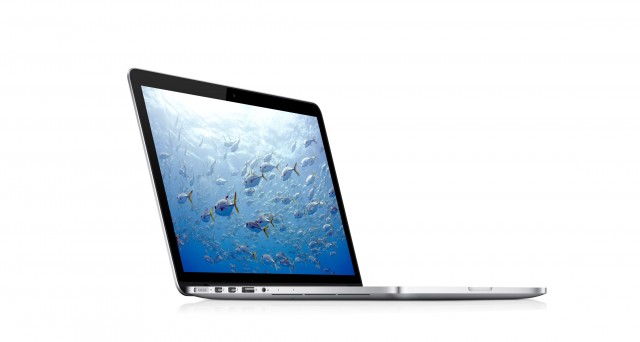

More than a year after introducing the first Retina MacBook Pro at the 2012 Worldwide Developer Conference, Apple has announced that the computers will be getting a refresh at today's media event. The most significant update to the new models' specifications comes from Intel's brand-newHaswell processors, which should improve the battery life significantly compared to their Ivy Bridge-based predecessors.
Updates to both the 15-inch and 13-inch models were revealed today, which gets the two models on the same refresh schedule. (The 15-inch model was originally introduced last June at the 2012 WWDC, but the 13-inch model was introduced last October.) The 13-inch laptop starts at $1,299. The 15-inch model starts at $1,999. Both models ship today.
The upgraded 13-inch Macbook Pro comes with a 2.4GHz (2.9GHz Turbo) Core i5, 4GB of DRAM, a 128GB SSD, and Haswell's integrated Iris GPU. This means that the baby Macbook Pro finally has a better GPU than the MacBook Air—the 2560×1600 screen will continue to soldier on with integrated graphics, but the Iris 5100 GPU should be a decent step up in performance from the HD 5000 GPU in the Airs.
The new 15-inch Retina MacBook Pro is a logical upgrade over last year's model. The entry-level Retina MacBook Pro now uses a Haswell-based quad-core 2.0GHz Core i7 CPU that can Turbo Boost up to 3.2GHz, while the high-end model uses a 2.3GHz (3.5GHz Turbo) part by default. Both laptops can be upgraded to 2.6GHz (3.8GHz Turbo) CPUs at purchase. To power the laptop's 2880×1800 display, Apple swaps out the Nvidia GeForce GT 650M GPU in last year's model for an upgraded GeForce GT 750M with 1GB of GDDR5 graphics RAM in the high-end models, though the lower-end models will only include the Intel Crystalwell (that is, Iris 5200) integrated GPU. The GeForce 700M GPUs are architecturally similar to their predecessors, but higher clock speeds and tweaks to that architecture should be good for a decent performance boost. As in last year's models, OS X can dynamically switch between the integrated Intel GPU and the dedicated Nvidia GPU based on workload to save power.
Intel says that Haswell should enable big jumps in general-usage battery life, and to that end Apple has increased the battery life figures for all Retina MacBook Pros from seven hours to more than nine hours.
Other new, minor tweaks include a 1080p FaceTime webcam, which replaces the 720p webcam in the outgoing models. Like the MacBook Air and 2013 iMac before it, the MacBook Pros are also picking up 802.11ac wireless networking (the adapter will continue to connect to 802.11n, g, b, and a networks). Both models also include higher-bandwidth Thunderbolt 2 ports. The 13-inch model has dropped a bit of weight and slimmed down, to 3.46 lbs and 0.71 inches.
And what of the non-Retina MacBook Pros? There's just one left: a non-Retina 13-inch model at $1199, and it hasn't been upgraded from last year's Ivy Bridge configuration. That means a 2.5GHz dual-core i5, Intel's integrated HD 4000 GPU, and yes, a 500GB mechanical hard drive. The 15-inch non-Retina device appears to have been put down, though. Rest easy, old friend, and say hi to the white plastic MacBook for us when you get to that farm upstate.
We will continue to update this post as more information becomes available.
Source:ArsTechnica.
OS X Mavericks comes out today—and it’s free

Posted by MH

Version 10.9 of OS X trades big cats for surfer dudes, lands on Macs today.


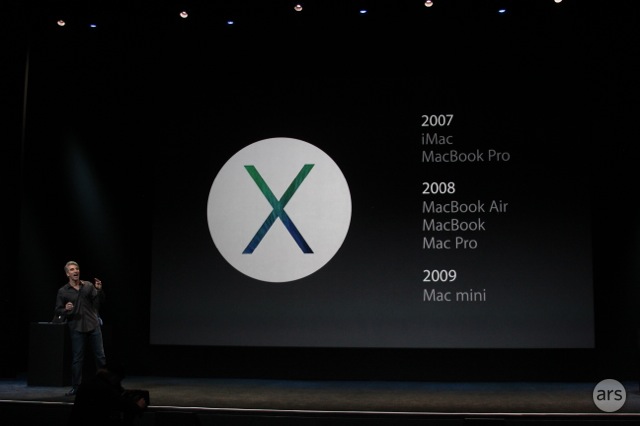
Hang ten and get gnarly, dudes. OS X 10.9 Mavericks is here. Named for a totally tubular surf spot in California, the latest Apple desktop operating system will be thundering our way today. Like Lion and Mountain Lion before it, it will be available in the Mac App Store. Upgraders can download the software for no cost.
The release was announced as part of Apple's October 22 press event at the Yerba Buena Center for the Arts in San Francisco, California. The new operating system brings a lot of under the hood changes, including a fix for OS X multi-monitor support. Another hotly anticipated feature is Finder Tabs, which takes a page from tabbed Web browser behavior and should allow users more flexibility when managing files. Visually, the new operating system has banished some of the more despised skeuomorphic elements that have crept onto the desktop over time. Apple's PR images show that things like iCal's leather stitching have been excised, leaving many applications less "touchable" but also less visually cluttered.
Efficient resource usage is also a major theme in the updated operating system. Apple's computer sales are dominated by portables, and Mavericks includes a great number of named features built to reduce the amount of power a Mac consumes and keep it running longer. In fact, Apple says that merely by installing Mavericks, Haswell-equipped Mac portables like the Macbook Air will gain at least an extra hour of battery life. Additionally, Mavericks gets a little smarter about memory management, compressing applications in memory and dynamically allocating memory to the GPU based on performance requirements.
It's not spoiling anything to say that our own John Siracusa has also been hard at work on the latest in his long string of highly anticipated, novel-length operating system reviews. You can read his epic thoughts on OS X Mavericks right here.
Mavericks is available right now—the download appears to have gone live at about 12:00 PT, though it might not be showing up as a featured item yet. You can get your electronic fingers on it by opening the Mac App Store application and searching for "Mavericks."
Source:arstechnica.

Prepare your wallets: What to expect from Apple’s October 22 event

Posted by MH


iPads and professional Macs are due for makeovers, and Mavericks should be here soon.


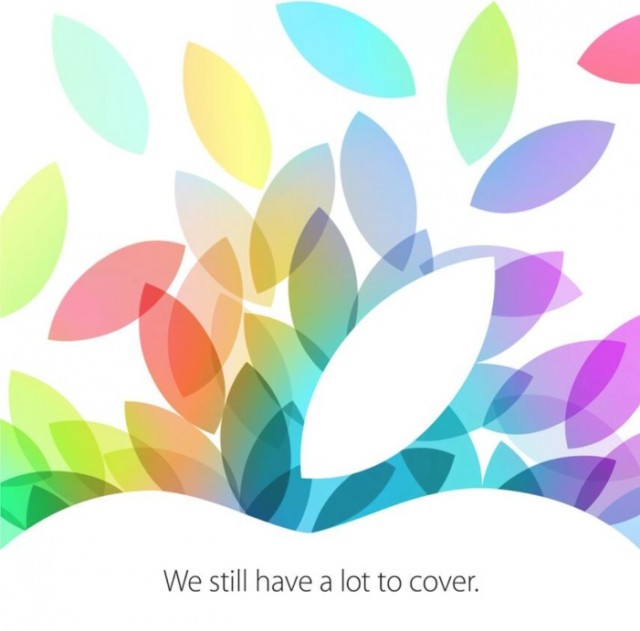
The invitations for Apple's October 22 media event say that the company still has "a lot to cover," and that's no exaggeration. We got two new iPhones and new iMacs in September, but a big chunk of Apple's product lineup is still due for its customary yearly refresh.
We don't like to cover each and every poorly sourced story that the rumor mill spits out, but we've taken a look at the current scuttlebutt to tell you what you're likely to see when Tim Cook takes the stage on Tuesday. Settle in, because it's a long list.

The iPad and iPad mini

First on the docket are new versions of both of Apple's tablets, the iPad and iPad mini. This year, each tablet is expected to borrow features from the other.
The larger iPad should pick up a number of iPad mini-inspired design cues, most notably its narrower display bezel, its stereo speaker grilles, and its slimmer profile. Recent, credible-looking part leaksshow off both silver and "space grey" versions of the tablet's new design, albeit without any of the internals installed. The new design would be the first substantial change to the look and feel of the full-size iPad since the iPad 2 was released in 2011.
We've heard less about the tablet's insides, but past precedent suggests that it will include an A7X chip that combines the two 64-bit CPU cores from the A7 with a more powerful (but architecturally similar) GPU and a wider memory interface. Apple has been shipping all of its high-end iOS devices with 1GB of RAM for a little over a year now, so expect the new iPad to include at least that much memory—in fact, even an upgrade to 2GB doesn't seem entirely out of the question (remember that the third-generation iPad went to 1GB of RAM before the iPhone line did). Pricing and internal storage will probably stay the same—current iPads include 16GB, 32GB, 64GB, or 128GB of storage and start at $499.
The iPad mini stands a pretty good chance of inheriting the large iPad's 2048×1536 Retina display, though the rumor mill has flip-flopped on this one quite a bit. Some reports have suggested that the Retina mini won't happen at all this year, while others have said that a Retina screen will come to higher-end models, but entry-level tablets will still come with non-Retina displays. Examination ofApple's supply chain by AppleInsider suggests that some models of the original iPad mini could continue on as entry-level models after the newer version is introduced. If Apple does continue to sell a non-Retina iPad mini alongside a Retina version, we think keeping the old version is more in line with Apple's usual strategy than a brand-new non-Retina tablet. Bringing in two new iPad minis at once would make software support that much more difficult for Apple and its software developers, and the current iPad mini already supports most of iOS 7's banner features (Siri and AirDrop are two big ones that some older hardware doesn't have).
If the iPad mini does pick up that Retina display, it has been suggested that the tablet may be subtly thicker and heavier than last year's model to accommodate the screen and the larger battery required to power it. The first full-size Retina iPads did exactly the same thing, retaining the iPad 2's basic look and feel but getting just a little bulkier out of necessity. We're not sure what chip would power a theoretical Retina mini, but as we noted in our iPhone 5S review, the GPU performance of the A7 is actually a little higher than the A6X that powers the fourth-generation iPad. Apple likes to re-use components where it can, so transplanting the A7 and its 1GB of RAM from the iPhone to the iPad mini wouldn't be a surprise. The current mini runs Apple's competent-but-aging A5 SoC, so an A7 or even some kind of new A6 or A6X variant would be a big upgrade.
The last iPads were released the second Friday after their announcement, which was also the case for the most recent iPhones. It's not a sure thing, but Apple's past behavior is a good predictor of its future behavior—November 1 is the launch date to pick in the office pool. Finally, expect the old iPad 2 to quietly disappear from the lineup.

Mavericks

iPads are going to be the main focus at the event, but Apple introduced several new Macs at last October's iPad event, and we expect the same thing this year.
We'll begin with the software: OS X 10.9 was unveiled in June at Apple's Worldwide Developers Conference (WWDC), and we already have a pretty good idea of what it brings to the table. Power-user features (including substantial and much-needed changes to multi-monitor support), energy- and resource-saving enhancements, and the continued death of skeuomorphism will all make Mavericks a nice improvement to Mountain Lion. We also know that any Mac that can run OS X 10.8will be able to upgrade to 10.9.
Apple issued a Golden Master build of Mavericks to developers weeks ago, so all we're really waiting for here is a release date and pricing information. We'd expect Mavericks to go live in the Mac App Store at any point between the October 22nd event and the end of the month, accompanied by an updated version of the OS X Server add-on.

Mac Pro

Like Mavericks, Apple took the wraps off of the new Mac Pro at WWDC, so we already know to expect a powerful and unique but less upgradeable professional computer. The new systems will come with big Ivy Bridge Xeon CPUs from Intel (with up to 12 cores), 1866MHz DDR3 RAM, PCI Express SSD slots, and new Thunderbolt 2 ports in addition to the new cylindrical design.
Apple said at WWDC that we'd know the Mac Pro's pricing and availability information in the fall, so it doesn't technically need to tell us anything else about the system before December 21. Still, given the imminent launch of Mavericks and strong interest in the computer from people who have been waiting for this upgrade since 2010, the timing seems right. We'd be surprised not to hear about a launch date on Tuesday, even if the system doesn't ship until a few weeks later (as happened with the 2012 iMacs).

MacBook Pros

That leads us to Apple's other "professional" Macs, the Retina MacBook Pros. Apple introduced the 15-inch and 13-inch models separately last year, but we expect both to be updated simultaneously this year. They're both likely to follow the same template as the 2013 MacBook Air: the same screen and chassis as the current models, but with Intel's Haswell CPUs, 802.11ac, PCI Express SSDs, and improved battery life. The new MacBook Pros could pick up Thunderbolt 2 ports, too.
The wild card in these new systems is the GPU, at least in the 15-inch model. Apple could choose to increase performance over the 2012 model by sticking in a new dedicated GPU from AMD or Nvidia, or it could choose to use one of Intel's high-end Iris 5200 integrated GPUs. Based on what we saw in the 2013 iMac, the Iris GPU would keep performance roughly the same (or even decrease it slightly) compared to the current model, but it would also take up less space on the computer's motherboard and reduce power usage compared to a dedicated GPU. The 13-inch model is more likely to go with the Iris 5100 GPU, which is somewhat faster than the HD 5000 used in the MacBook Airs but lacks the 128MB of eDRAM that helps the Iris 5200 perform as well as it does.
In any case, expect the 15-inch model to continue using quad-core CPUs while the 13-inch model sticks with dual-core CPUs (much faster ones than in the Airs, but dual-core nonetheless). Intel's ARK product pages list several CPUs that would be ideal for next-generation MacBook Pros with integrated graphics—this one (or one like it) could work for the 15-inch model and this one for the 13-inch.
Finally, let's talk about the non-Retina MacBook Pros that are still hanging around. There are two likely courses of action here: Apple quietly refreshes them (or even keeps them on Ivy Bridge) and continues to sell them alongside the Retina Macs as entry-level models, or Apple lowers the prices of the Retina computers a bit and sends the old Pros off into the sunset. Optical drives and rotational hard disks make the non-Retina laptops anachronisms in Apple's mobile lineup, so we're hoping the company goes with option two.

And the rest

A few of Apple's other products are theoretically due for an update—of these, we think a quiet Haswell bump for the Mac mini is the most likely, though this could be done offstage like the 2013 iMac introduction. The iPods didn't get refreshed back in September, but Apple seems to have settled into an every-other-year update cycle for its media players; an update now seems unlikely. Apple could put out a new Apple TV box, though the current model's design was just tweaked back in March. Barring the introduction of a developer API or some other substantial change to Apple's present Apple TV strategy, the set-top box is already as powerful as it really needs to be.
Finally, we could always see something that's more than just the latest iteration of one of Apple's existing product lines—hope springs eternal, and some analysts will never stop chasing big dreams of iWatches and Apple televisions.
If you're hoping for something all new, here are two points to consider: Apple isn't great at controlling leaks from its supply chain, so if something new was in mass production right now it's near-certain that we'd already be seeing the customary part leaks and repeated, insistent reports from "people familiar with the matter." That said, consider the June announcement of the Mac Pro—Apple was clearlydeveloping the computer, but wasn't yet producing it in large numbers, and in those cases the company can still keep a secret. Apple has enough stuff to fill an entire event without a brand new product, but if it does unveil something new we wouldn't expect it to come to market just yet.
Whatever Apple announces, Ars will be there on the ground on Tuesday morning at 10:00 PDT to liveblog the proceedings and get some hands-on time with the new stuff. Our customary in-depth reviews will follow in the days and weeks afterward.
Source:Arstechnica.
Techkeyfactor copyright © 2015 allright are reserved. Powered by Blogger.

Top5 Events