Techkeyfactor

Prepare your wallets: What to expect from Apple’s October 22 event

Posted by MH


iPads and professional Macs are due for makeovers, and Mavericks should be here soon.


The invitations for Apple's October 22 media event say that the company still has "a lot to cover," and that's no exaggeration. We got two new iPhones and new iMacs in September, but a big chunk of Apple's product lineup is still due for its customary yearly refresh.
We don't like to cover each and every poorly sourced story that the rumor mill spits out, but we've taken a look at the current scuttlebutt to tell you what you're likely to see when Tim Cook takes the stage on Tuesday. Settle in, because it's a long list.

The iPad and iPad mini

First on the docket are new versions of both of Apple's tablets, the iPad and iPad mini. This year, each tablet is expected to borrow features from the other.
The larger iPad should pick up a number of iPad mini-inspired design cues, most notably its narrower display bezel, its stereo speaker grilles, and its slimmer profile. Recent, credible-looking part leaksshow off both silver and "space grey" versions of the tablet's new design, albeit without any of the internals installed. The new design would be the first substantial change to the look and feel of the full-size iPad since the iPad 2 was released in 2011.
We've heard less about the tablet's insides, but past precedent suggests that it will include an A7X chip that combines the two 64-bit CPU cores from the A7 with a more powerful (but architecturally similar) GPU and a wider memory interface. Apple has been shipping all of its high-end iOS devices with 1GB of RAM for a little over a year now, so expect the new iPad to include at least that much memory—in fact, even an upgrade to 2GB doesn't seem entirely out of the question (remember that the third-generation iPad went to 1GB of RAM before the iPhone line did). Pricing and internal storage will probably stay the same—current iPads include 16GB, 32GB, 64GB, or 128GB of storage and start at $499.
The iPad mini stands a pretty good chance of inheriting the large iPad's 2048×1536 Retina display, though the rumor mill has flip-flopped on this one quite a bit. Some reports have suggested that the Retina mini won't happen at all this year, while others have said that a Retina screen will come to higher-end models, but entry-level tablets will still come with non-Retina displays. Examination ofApple's supply chain by AppleInsider suggests that some models of the original iPad mini could continue on as entry-level models after the newer version is introduced. If Apple does continue to sell a non-Retina iPad mini alongside a Retina version, we think keeping the old version is more in line with Apple's usual strategy than a brand-new non-Retina tablet. Bringing in two new iPad minis at once would make software support that much more difficult for Apple and its software developers, and the current iPad mini already supports most of iOS 7's banner features (Siri and AirDrop are two big ones that some older hardware doesn't have).
If the iPad mini does pick up that Retina display, it has been suggested that the tablet may be subtly thicker and heavier than last year's model to accommodate the screen and the larger battery required to power it. The first full-size Retina iPads did exactly the same thing, retaining the iPad 2's basic look and feel but getting just a little bulkier out of necessity. We're not sure what chip would power a theoretical Retina mini, but as we noted in our iPhone 5S review, the GPU performance of the A7 is actually a little higher than the A6X that powers the fourth-generation iPad. Apple likes to re-use components where it can, so transplanting the A7 and its 1GB of RAM from the iPhone to the iPad mini wouldn't be a surprise. The current mini runs Apple's competent-but-aging A5 SoC, so an A7 or even some kind of new A6 or A6X variant would be a big upgrade.
The last iPads were released the second Friday after their announcement, which was also the case for the most recent iPhones. It's not a sure thing, but Apple's past behavior is a good predictor of its future behavior—November 1 is the launch date to pick in the office pool. Finally, expect the old iPad 2 to quietly disappear from the lineup.

Mavericks

iPads are going to be the main focus at the event, but Apple introduced several new Macs at last October's iPad event, and we expect the same thing this year.
We'll begin with the software: OS X 10.9 was unveiled in June at Apple's Worldwide Developers Conference (WWDC), and we already have a pretty good idea of what it brings to the table. Power-user features (including substantial and much-needed changes to multi-monitor support), energy- and resource-saving enhancements, and the continued death of skeuomorphism will all make Mavericks a nice improvement to Mountain Lion. We also know that any Mac that can run OS X 10.8will be able to upgrade to 10.9.
Apple issued a Golden Master build of Mavericks to developers weeks ago, so all we're really waiting for here is a release date and pricing information. We'd expect Mavericks to go live in the Mac App Store at any point between the October 22nd event and the end of the month, accompanied by an updated version of the OS X Server add-on.

Mac Pro

Like Mavericks, Apple took the wraps off of the new Mac Pro at WWDC, so we already know to expect a powerful and unique but less upgradeable professional computer. The new systems will come with big Ivy Bridge Xeon CPUs from Intel (with up to 12 cores), 1866MHz DDR3 RAM, PCI Express SSD slots, and new Thunderbolt 2 ports in addition to the new cylindrical design.
Apple said at WWDC that we'd know the Mac Pro's pricing and availability information in the fall, so it doesn't technically need to tell us anything else about the system before December 21. Still, given the imminent launch of Mavericks and strong interest in the computer from people who have been waiting for this upgrade since 2010, the timing seems right. We'd be surprised not to hear about a launch date on Tuesday, even if the system doesn't ship until a few weeks later (as happened with the 2012 iMacs).

MacBook Pros
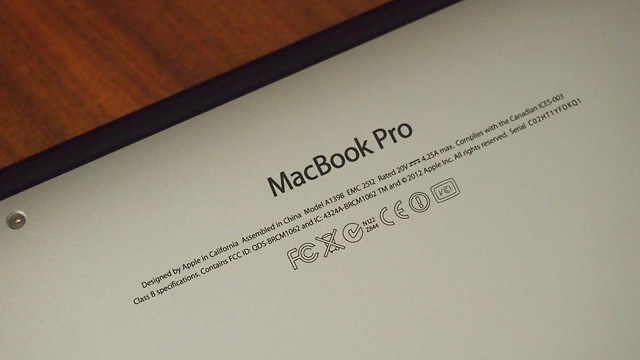
That leads us to Apple's other "professional" Macs, the Retina MacBook Pros. Apple introduced the 15-inch and 13-inch models separately last year, but we expect both to be updated simultaneously this year. They're both likely to follow the same template as the 2013 MacBook Air: the same screen and chassis as the current models, but with Intel's Haswell CPUs, 802.11ac, PCI Express SSDs, and improved battery life. The new MacBook Pros could pick up Thunderbolt 2 ports, too.
The wild card in these new systems is the GPU, at least in the 15-inch model. Apple could choose to increase performance over the 2012 model by sticking in a new dedicated GPU from AMD or Nvidia, or it could choose to use one of Intel's high-end Iris 5200 integrated GPUs. Based on what we saw in the 2013 iMac, the Iris GPU would keep performance roughly the same (or even decrease it slightly) compared to the current model, but it would also take up less space on the computer's motherboard and reduce power usage compared to a dedicated GPU. The 13-inch model is more likely to go with the Iris 5100 GPU, which is somewhat faster than the HD 5000 used in the MacBook Airs but lacks the 128MB of eDRAM that helps the Iris 5200 perform as well as it does.
In any case, expect the 15-inch model to continue using quad-core CPUs while the 13-inch model sticks with dual-core CPUs (much faster ones than in the Airs, but dual-core nonetheless). Intel's ARK product pages list several CPUs that would be ideal for next-generation MacBook Pros with integrated graphics—this one (or one like it) could work for the 15-inch model and this one for the 13-inch.
Finally, let's talk about the non-Retina MacBook Pros that are still hanging around. There are two likely courses of action here: Apple quietly refreshes them (or even keeps them on Ivy Bridge) and continues to sell them alongside the Retina Macs as entry-level models, or Apple lowers the prices of the Retina computers a bit and sends the old Pros off into the sunset. Optical drives and rotational hard disks make the non-Retina laptops anachronisms in Apple's mobile lineup, so we're hoping the company goes with option two.

And the rest

A few of Apple's other products are theoretically due for an update—of these, we think a quiet Haswell bump for the Mac mini is the most likely, though this could be done offstage like the 2013 iMac introduction. The iPods didn't get refreshed back in September, but Apple seems to have settled into an every-other-year update cycle for its media players; an update now seems unlikely. Apple could put out a new Apple TV box, though the current model's design was just tweaked back in March. Barring the introduction of a developer API or some other substantial change to Apple's present Apple TV strategy, the set-top box is already as powerful as it really needs to be.
Finally, we could always see something that's more than just the latest iteration of one of Apple's existing product lines—hope springs eternal, and some analysts will never stop chasing big dreams of iWatches and Apple televisions.
If you're hoping for something all new, here are two points to consider: Apple isn't great at controlling leaks from its supply chain, so if something new was in mass production right now it's near-certain that we'd already be seeing the customary part leaks and repeated, insistent reports from "people familiar with the matter." That said, consider the June announcement of the Mac Pro—Apple was clearlydeveloping the computer, but wasn't yet producing it in large numbers, and in those cases the company can still keep a secret. Apple has enough stuff to fill an entire event without a brand new product, but if it does unveil something new we wouldn't expect it to come to market just yet.
Whatever Apple announces, Ars will be there on the ground on Tuesday morning at 10:00 PDT to liveblog the proceedings and get some hands-on time with the new stuff. Our customary in-depth reviews will follow in the days and weeks afterward.
Source:Arstechnica.

NVIDIA Cutting Video Card Prices in October to Compete with AMD?

Posted by MH

By 


With every new launch one thing all users agree on is that dropping prices generates sales and for NVIDIA they make be just what the doctor ordered to help them keep selling in the wake of AMD’s new card launch. AMD has just announced their entire new card lineup the R7 and R9 series that will put a dent in NVIDIA’s sales and in an effort to combat that NVIDIA is rumored to be lowering their prices on many of their video cards.
This new rumor comes from tech site DigiTimes who claims to have sources in the industry that are saying this may become a reality in the near future. I have no problem believing it as that is a logical move for them in this situation.  A lot of the card that are being released from AMD seem to be just re-branded cards with only the R9 290X being the sole totally new card of the lineup and depending on how the cards actually do in testing will determine how determined NVIDIA is to lower the cost of their products.

NVIDIA as of now has the following four cards in their GeForce 700 series: The GTX 760, GTX 770, GTX 780 and GTX Titan, all priced more than $249, with older GeForce 600 cards still on the market for lower price segments. It’s possible that NVIDIA will release a new GK104 or GK106 based graphics cards for the $149-249 price segment, to compete with AMD’s Radeon R9 270X and R7 260X, but for now that is still up in the air.  NVDIA and AMD play off each other as the battle between them goes back and forth and on again, but at the end of the day that only helps the end-user get a better price.
NVIDIA is never one to just sit around on their laurels and await the bomb to drop so you know they will have something up their sleeve to keep them competitive in the sales game. NVIDIA has already been rumored to be working on 2 new cards as you read this article. NVIDA has already leaked that they will have a dual-GPU card based on GK110 cores, with a proposed nomenclature of the GeForce GTX 790. The GK110 silicon has also yet to be fully ‘unlocked’, with the GTX Titan using 2,688 of 2,880 CUDA cores on the die, meaning theirs is always room for a new high-end single-CPU card. As the holiday season is right around the corner it will be interesting to see how this all plays out, but lowering their prices can never be a bad thing for us so lets keep our fingers crossed. Thanks for reading Tech Of Tomorrow, where we love for you to interact on the site. Let us hear your thoughts and ideas in the comments down below.

Retina iPad Mini & iPad 5 to be announced October 22nd: What to Expect

Posted by MH

By 


About a month ago, on September 10th, Apple released their long awaited refresh its widely popular iPhone lineup. The company released two, brand-new iPhones (for the first time ever), the iPhone 5S and iPhone 5C. The new iGadgets brought some neat features to the table such as iOS 7, a fingerprint scanner, and a 64-bit A7 CPU, but Apple may be ready for “Round 2.”
“People familiar with Apple’s plans” tell tech site All Things D that the company is holding an invite-only and exclusive event on Tuesday, October 22. We currently don’t know where the event will take place, however.
October 22nd looks to be a big day for the world of tech. Interestingly enough, that fine Tuesday will also bring the availability of the Surface 2 and Surface 2 Pro tablets from Microsoft. Nokia is also bringing some goodies to the table on the 22nd as well. The company is expected to unleash six new devices, namely the 6-inch Lumia 1520 “phablet.” We are also expecting the unveiling of the heavily leaked and rumored Google Nexus 5 flagship smartphone along with Android 4.4 “KitKat” around the same time frame.

Apple seemingly has a lot on the agenda for the 22nd.We are expecting to see an iPad lineup overhaul with the addition of a completely redesigned full sized iPad will smaller bezels paired with a more iPad Mini-esque architecture and an iPad Mini with a higher-resolution Retina display (though recent reports have shown this has a 50/50 chance of actually dropping). The new iPads will most likely follow in the footsteps of the iPhone 5S by introducing things like a 64-bit chip and a fingerprint scanning home button.
On the Mac side of the spectrum Apple’s latest computing OS, OS X Mavericks, will undoubtedly make an appearance and broadcast a release date. The long awaited refreshed Mac Pro will also become available to customers soon after the event, and might even bring some R2-D2 nostalgia to Star Wars fans everywhere. We can also look forward to updated MacBook Pros sporting Intel’s latest and greatest Haswell CPUs for huge jumps in the battery life department.

If Apple confirms the date, mark your calendar, because there will be a load of new gadgets just around the corner.

Battlefield 4 Multi-Player Beta Gameplay, Benchmarks & First Impressions

Posted by MH

By 


While a number of exciting new things were released today including GTA Online, by far one of the most anticipated is the currently exclusive Beta for Battlefield 4. We got a chance to try the game out this morning and ran a few benchmarks, as well as test out the new content.
The beta itself is focused on the Shanghai map, which can currently be played in either Domination or Conquest. These two modes are basically the same in their objective of holding down key area’s, but domination is a small segment of the map with a few players, whereas conquest is the full scale version featuring up to 64 participating players at once. The reason behind this choice is that Shanghai is meant to capture all the biggest things DICE wishes to accomplish with BF4, specifically a good balance of needing all types of vehicles whether they be by land, sky, or sea, and a concept that they like to call “Levolution”.
Levolution is the idea that the map itself changes as the battle rages on, leading to a change in team tactics and situations. While numerous small examples of this exists like destroying a wall or lowering shutters, by far the intriguing example is the skyscraper placed at the center of the map. At the start of a match players may rely heavily on air transport to get to the top or use elevators, which makes it a lot easier to defend once you hold it because you know where your opposition can come from.
However, teams have the option of taking out the building’s supports which cause the whole thing to come crashing down, completely changing the center area of the map from a tall skyscraper to an uneven pile of ruined terrain. This causes both sides to have to adjust their approach, and is hopefully only one major example of what we might see in future maps, whether they be in the base game or future DLC. This aside, the core gameplay is still very much the same as BF3, with some tweaks and an overall prettier look as well. Organized squads and teamwork are still essential, and vehicle use is heavily recommended when it’s available.
If you want to check this stuff out in action as well as see our benchmarks, make sure to check out our video recap. If you want a chance to try out the beta for yourself, it’s currently exclusive to people that own BF3 Premium or Medal of Honor: warfighter, or you can get access by pre-ordering the games Digital Deluxe Edition. If you don’t want to shell out the money just yet, the Beta will be entering Open stages starting on the 4th, which it will remain in until it ends on the 15th, ten days before the game’s official release on Oct 25th. If you’ve already spent some time on it yourself, make sure to let us know in the comments what you’ve thought of the game so far, changes you like, don’t like, or just your thoughts about the Shanghai map itself.

The Specs for Valve's High-End Steam Machine Prototype

Posted by MH

BY NORMAN CHAN 
Basically a high-end gaming PC in a custom case.

Valve released more details today about the hardware specs for its Steam Machines program, specifically detailing the specifications of the 300 prototypes its building to test its upcoming Linux-based Steam OS. In a post on the Steam Community forums, Valve reiterated that the hardware inside its prototype boxes would consist of all off-the-shelf parts that any gamer can buy today, with the only proprietary piece of hardware being the custom enclosure. And even for that chassis, Valve says that it'll share the CAD files for anyone who wants to replicate it on their own. Here's the rundown of the hardware.

  • GPU: some units with NVidia Titan, some GTX780, some GTX760, and some GTX660
  • CPU: some boxes with Intel i7-4770, some i5-4570, and some i3
  • RAM: 16GB DDR3-1600 (CPU), 3GB GDDR5 (GPU)
  • Storage: 1TB/8GB Hybrid SSHD
  • Power Supply: Internal 450w 80Plus Gold
  • Dimensions: approx. 12 x 12.4 x 2.9 in high
A couple interesting things we can take away from this. One is that Valve's Steam Machine prototype is a self-contained PC that is designed to run games locally, given its mid and high-end components (as a hardware beta test, it makes sense that the prototype won't be a single spec). This isn't the cheap box that you'll be able to buy next year from Valve's OEM partners for streaming games from a networked Windows gaming PC, but there's no reason that the prototypes can't stream as well--especially since that streaming could possibly use Nvidia's H.264-encoded streaming tech.
Valve also calls its prototype fully upgradable, though given the dimensions of its chassis that may be tough. 12x12x3" is not a lot of space--about the size of an Xbox 360--and a GeForce Titan graphics card would already take up a sizable bit of that volume, at 12x4x1.5". I'm assuming the use of a mini-ITX motherboard, which measures 6.7x6.7", and the use of a right-angle PCI-E riser/adapter to get the graphics card to fit. Compact gaming PCs like Alienware's X51 and Falcon's Tiki both used these video card adapters to get all the hardware to fit in a narrow console-like profile.
Valve also didn't specify whether the prototypes would be using air or water cooling for its CPU, but I assume the latter in the interest of quiet acoustics and avoiding airflow management in that compact space. And for these type of mini-ITX cases, the internal power supply is likely locked-in, which explains the relatively conservative 450W rating. Given those essential components, there may not be a whole lot of options for upgrading (definitely not adding additional drives) with this prototype design. A better option for someone looking to assemble a fast and quiet living room PC would be something like the Titan-based mini-ITX system we built earlier this year.
Source:Tested.

Google Play App Roundup: Circa, Kingdom Rush Frontiers, and Shadowrun Returns

Posted by MH

BY RYAN WHITWAM 
News, towers, and cyberpunk.

The days are growing shorter as winter approaches, but you don't need to be bummed. That's just more time you get to justifiably spend curled up with a smartphone or tablet. Although, you want the best apps and games to keep you company, so the Google Play App Roundup is a good place to start. This is where we go over the best new stuff on Android every week. Just click the links to head right to Google Play.
This week news gets more mobile, the kingdom is again under attack, and the future gets magical.

Circa

There are already RSS readers, web browsers, and untold mountains of apps for single news sources like newspapers and blogs. So why do we need another one? Well, none of those news sources are created with mobile in mind. Circa is an app that gathers information from multiple sources, then builds a timeline for each story that you can scroll through and get the relevant details complete with citations.
Circa uses the Holo guidelines when it makes sense, and tweaks things to improve the design. It has the Android hamburger navigation panel on the left, but doesn't use an exposed tab bar at the top to list the different news categories. You can still slide left and right to get between the different news categories, but the animation is a sort of fading slide-in -- it looks really neat.
Each story is brought up in a new screen (on phones) with a vertically scrolling list of tidbits. Each entry is a different aspect of the story with a link to the source. This allows you to figure out what's going on in general, but also dig into certain aspects of an event. If you're particularly into a story, it can be added to your favorites and the app will notify you in the background when new info is available.
Circa is optimized for tablets with a two-column UI that let's you see a timeline while still scrolling through the list of stories. There's also a cool home screen widget that can list stories from whatever category you want.
This isn't an automated process, but a human-powered editorial endeavor. As such, you won't see the same information rewritten from five different sites and the longer articles on a topic will be distilled down in an intelligent way. Circa seems very useful and its free.

Kingdom Rush Frontiers

The original Kingdom Rush has been one of the top games in Google Play ever since it arrived early this summer. Now the sequel, Kingdom Rush Frontiers has hit Android, and there is really nothing to dislike here. This title brings more of the killer tower defense action from the original, but with new heroes and towers to play with.
Some Android users automatically ignore tower defense games, and you almost can't blame them -- there are a ton of very similar games out there. Kingdom Rush Frontiers sets itself apart by offering very well-balanced gameplay with various additional tasks, and even some almost RPG elements.
The core tower defense elements are all there, so you can get up to speed quickly in Kingdom Rush Frontiers. Each level has one or more entry and exit points for the creeps. You just have to stop them from getting to the exit by throwing up towers along the predefined path. There are ranged towers like the archers, artillery, and mages. Then you also have ground infantry barracks. You have to combine all these for an effective strategy. Additionally, each tower has two different upgrade paths with a few special powers that can be added. Basically, there's a lot of variation in the gameplay.
There is also the hero system to play around with in Kingdom Rush Frontiers. You get three heroes for free in this title, but the game also offers you the option of buying more with real money. You don't have to do thi, but it's a way to get a little more out of the game. Whichever hero you use, he/she/it will gain experience and level up, allowing you to add new skills. While you can move the hero around the map as you like, the attacks are automatic.
Kingdom Rush Frontiers does an impeccable job of keeping you interested -- it's never a lazy TD game. Sometimes new paths will appear mid-game, or an enemy will disable or destroy some towers. It's a really engrossing experience from beginning to end. This is also a fully updated version of the game, including the new tropical-themed campaign that was just added to the iOS version.
The graphics are essentially identical to the first game, which is totally fine. Kingdom Rush Frontiers has a strong cartoon vibe with strong lines and simple textures. The visuals are quirky and fun with a sprinkling of nerd references. The game also runs flawlessly on any modern Android device.
Kingdom Rush Frontiers is absolutely worth the $2.99 price. I'd pay even more because it's just that great.

Shadowrun Returns

The classic tabletop role playing universe Shadowrun is back, and this time the original creator is working behind the scenes to make sure everything fits within the Shadowrun cannon. Shadowrun Returns is a turn-based RPG that pulled in almost $2 million on Kickstarter last year. After debuting on PC earlier this year, the game is now on Android. It's pricey at $9.99, but it has the potential to scratch your RPG itch like few mobile games can.
Just like a regular non-mobile RPG, you get to choose your character's race, gender, and class at the start of the game. Shadowrun is set in a future where magic has returned to Earth. So you can be a human, elf, orc, troll, or dwarf. The classes include tech-focused options and magical ones. Shadowrun Returns is an interesting mix of gritty cyberpunk technology and spells, and you don't have to restrict yourself to one or the other. Nothing is stopping you from starting as a Rigger with a group of combat drones, then leveling your spellcasting skills.
The story and dialog in this title are very well done. The characters are believable and there is a remarkable lack of cringy one-liners. This isn't an entirely open world game -- Shadowrun Returns sends you from one location to the next, but you can usually wander around in these areas.
Getting around and interacting with objects is as easy as tapping anywhere on the screen. When combat starts, it's all turn-based, which means strategy and planning are essential. Each member of your party gets a chance to do some damage, then the enemies get their turn. Each mission will probably have one larger skirmish and possibly a smaller one at the beginning. The balance seems good overall, but you need to properly develop your character's strengths and play to them.
The graphics in Shadowrun Returns remind me quite a lot of the old Fallout games. The textures have been pumped up a bit, but it still has that static look indicative of isometric top-down games. The lines are clean and the lighting effects look good. Shadowrun does what it needs to visually without wasting resources.
Shadowrun Returns is not without its issues, though. The game still has some bugs that will stymie your progress on occasion. In fact, I couldn't get the Rigger skills to work half the time. The spaced-out autosaves are also an issue -- you have to play for at least 20-30 minutes to make any real progress. If you jump into another app for any reason, Shadowrun Returns will probably be killed by the system because it uses a lot of RAM.

Despite the issues, Shadowrun Returns is fun. The RPG elements are solid, and the story is engaging. It's also a really cool world with advanced technology existing alongside magic. Casual gamers might want to hold out for some improvements, but RPG fans can probably justify $9.99 for 12 hours of cyberpunk questing.
Source:Tested.

Nest Protect Takes a $130 Shot at the Smoke Detector

Posted by MH

BY WESLEY FENLON 

Nest's new home appliance is smart, just like its thermostat. And when it gets a whiff of smoke, it talks to you.
$130 is how much it will cost to protect you from the dangers of pan frying a steak. $130 is the price of Nest's new smoke detector, the Nest Protect. Like the Nest Thermostat, the Protect aims to reinvent a longstanding home appliance with something smarter and more efficient. For the Thermostat, that means learning your habits and adjusting temperatures automatically. For the Protect, that means, first and foremost, talking to you.

When the Nest Protect catches a hint of smoke, it won't immediately set off its klaxon. A calm female voice will instead say: "I detect smoke in the kitchen." Your steak is really sizzling.
PHOTO CREDIT: NEST
Wired has a big feature on the reveal of the Nest Protect, which seems like a natural choice for the company to develop next. Smoke alarms are obnoxious and mandated, which gives Nest room for improvement and a guaranteed market. And the Protect will still blare out a warning siren if it detects a government-mandated level of smoke, but under that level, it behaves a bit more rationally.
Nest's smoke detector has sensors to differentiate between smoke and steam. It also has a built-in carbon monoxide detector, something that can also save lives (and is mandatory in some states). A sensor suite provides detection for smoke, steam, temperature, movement, and ambient light. When the lights go off, a ring around the Protect briefly glows green. When it detects movement, it glows white for illumination. A yellow glow means the Protect needs new batteries.
The device looks more rectangular than your average smoke detector, with a speaker grill-like faceplate styled after a sunflower. Nest wants people to love their Protect, but making the product work, and work well, fills a grander purpose: Keeping people from disconnecting their smoke alarms. We hate our smoke alarms so much, sometimes we'd rather unplug them than risk a false alarm. And when real fires happen, there's no warning.
PHOTO CREDIT: NEST

Like the Nest Thermostat, the Protect can wirelessly communicate with other devices, so the carbon monoxide detector could tell your furnace to shut off, or the detector in the kitchen could warn you that it detects smoke in the bedroom. And like the Thermostat, the Protect will endlessly collect data, using algorithms to learn your routines and grow smarter. And it better be one smart smoke detector indeed, when it costs about $100 more than the small white devices in most American homes.
Source:Tested.

The End of the ATX PC Form Factor

Posted by MH


BY NATHAN EDWARDS 
Smaller motherboards allow for smaller cases with more efficient airflow, while still giving you everything you need for a powerful desktop computer. You lose some PCI expansion slots, but how many of those does the typical PC gamer really need?


The standard ATX motherboard form factor has been around for a long time (since 1995!), long enough that its layout doesn't really make any sense anymore. We've tried to kill it in the past, to no avail--Dell was the last BTX holdout--but what may finally kill ATX are its smaller siblings. Smaller motherboards allow for smaller cases with more efficient airflow, while still giving you everything you need for a powerful desktop computer. You lose some PCI expansion slots, but how many of those does the typical PC gamer really need?
Valve is clearly betting on a post-ATX world. Its Steam Machine test units measure 12 inches by 12 inches by 3 inches and use standard desktop parts--including, Valve says, replaceable motherboards, so they're almost certainly microATX or mini-ITX based

ATX vs. MicroATX vs. Mini-ITX

You're probably already familiar with the standard ATX motherboard layout. After all, it's been in most of the desktop computers you've owned for the last 20 years--unless you bought a lot of Dells last decade. You know how it goes: 12 inches high, 9.6 inches wide, I/O ports on the top of the left edge, CPU in the upper middle, RAM to the right of it (and sometimes to the left). SATA ports on the lower right, expansion slots in the lower left quadrant. A typical ATX motherboard has six to eight SATA ports, four or more RAM slots, and seven or eight expansion slots.
I'd argue that many of those port and slots are unnecessary. You can build a fantastic desktop and never need more than two or three storage drives, or more than one graphics card and a sound card. You really only need two RAM slots, thanks to 8GB DIMMs, so why would you put all that into a case that's four cubic feet in volume?
A smaller case with the parts closer together will actually be easier to cool.
A standard ATX case takes in air in the lower part of the front panel, and exhausts it out the top and upper rear of the case. This provides a consistent airflow, but the problem is that the major heat-producing parts--the CPU, GPU, and drives--are not all in a straight line, and they're far enough apart that it's hard to cool all of them efficiently with just a few fans. Hence the giant wind tunnels you see in enthusiast systems with a half a dozen fans. A smaller case with the parts closer together will, counter-intuitively, actually be easier to cool.

MicroATX boards are generally 9.6 by 9.6 inches--just a few inches shorter than ATX motherboards. They tend to have four RAM slots, a full-sized CPU socket, six or so SATA ports, and four or fewer expansion slots. I'd argue that this is the enthusiast sweet spot these days, rather than ATX. A MicroATX system can accommodate a dual-GPU setup or a single GPU and a discrete sound card. If you want both, you'll have to go to full ATX.

Loyd's latest gaming PC build is on a MicroATX board and case, and he had plenty of room for all the components of a powerful gaming computer. He could even have used a mini-ITX board and case, if he didn't want a discrete internal sound card. I'm in exactly the same boat--if it wasn't for the sound card I use to power my headphones, I could be using a mini-ITX board and case too. But then, I already have my MicroATX case and mobo, so there's no reason for me to side-grade. My Sandy Bridge i5-2500K and Z68 motherboard will last me for another few years easily.
Move to Mini-ITX and you do end up with a few size-based constraints. Mini-ITX boards are 6.7 inches squared, and weren't originally designed for full-sized desktop CPU sockets at all. Thankfully, radder heads prevailed and we've been able to buy Mini-ITX boards with Intel and AMD desktop sockets for half of a decade. Mini-ITX boards with desktop sockets tend to use two full-sized RAM slots, have four SATA ports, and one PCIe x16 slot, although some with the Thin Mini-ITX standard use desktop processors but mobile RAM. Thin Mini-ITX boards often have onboard mini-PCIe and mSATA slots for WiFi cards and mini SSDs, but no x16 PCIe slot. These are usually used for very low-profile situations, like all-in-one computers or point-of-sale machines, and they're not really interesting for gamers.
If I were building a system today, and I was using an external sound card or USB speakers like the Bowers & Wilkins MM-1s, I'd use a mini-ITX board and case. Even a great gaming PC really only needs a mobo, CPU, RAM, one graphics card, an SSD, and a mass storage drive. And an optical drive, if you're fancy. A good mini-ITX case, like the BitFenix Prodigy or Silverstone's Fortress FT03-Mini or Sugo SG-08, can easily accommodate a powerful system and cool it efficiently with just one fan.
Looking for more on specific ATX, MicroATX, and mini-ITX cases? Check out my earlier guides: The Right Case for Your Next PC Build, Part One and Part Two.

What's are People Actually Building?

If smaller form factors were really enough for gaming, wouldn't we see mini-ITX and MicroATX mobos and cases, and full-on small form factor gaming rigs, increasing in popularity?
SILVERSTONE'S TJ08-E MICROATX CASE.
Yep. I asked Tony Ou at Silverstone if he could share some case sales stats with me. In 2010, three of Silverstone's top ten most-sold cases were MicroATX, one was mini-ITX, and the other six were ATX midtowers or full-towers. In 2011, five of the top ten were MicroATX and two were mini-ITX. Last year, the top five were all MicroATX, the 6th and 7th best-selling cases were Mini-ITX, 8 and 9 were MicroATX again, and only the tenth best-selling case was a full ATX case.
Now, those numbers came with some caveats. Tony said, "MicroATX and Mini-ITX have always been major part of our case business so I don’t think we are an accurate indicator for the overall market," and added that SFF cases are more popular in areas with higher incomes, like "North America, Japan, and some parts of Europe," but that the rest of the world is still ruled by full-sized ATX cases. Still, the fact that small form factor cases were the top nine best selling cases for Silverstone shows that there's real demand.
Small-form-factor gaming rigs like the Alienware X51iBuyPowerRevoltDigital Storm Bolt, and Falcon Tikiare becoming quite popular. Those cases take the mini-ITX form factor (or, rarely, design their own motherboards) and compress it even further through the use of clever engineering and riser cards. Because they're even smaller than off-the-shelf small form factor cases, these mini gaming rigs tend to cost more than the DIY versions. But man, the small size is appealing. (It's not online yet, but the November 2013 issue of Maximum PC has a four-way roundup of these mini gaming rigs.)
It looks like Valve's Steam Machine, at least in its prototype configuration, will follow the same basic design as the rigs mentioned above. The prototypes will run full-sized GPUs up to the size of Nvidia's Titan, use hybrid hard drives (presumably the 2.5-inch 1TB Seagate Barracuda XT), have 16GB DDR3/1600, run 450W power supplies, and be 12x12.4x2.9 inches--slightly smaller than the Falcon Northwest Tiki.

New Units of Computing

What about folks who use a desktop for the form factor, not the power? Even if I didn't play games, after all, I'd want a 27-inch monitor, keyboard and mouse in my home office. It's just easier to work with that setup than with a 13-inch laptop.
If that's what you want--desktop input/output without the actual desktop--then you have two options. Either get a laptop and a docking station, or a really small form-factor PC.
Honestly, if I wasn't a gamer, I'd get an ultrabook or ThinkPad (or ThinkPad ultrabook) and a docking station so I could connect a nice 27-inch monitor, keyboard and mouse, speakers, and external drive when I was at my desk.
But if I wanted a little more power, or didn't plan on taking my machine with me, ever I'd get one of the newer, even smaller computers that are coming out, like the Intel Next Unit of Computing (NUC). Unlike even tinier and cheaper mini-boards like the Raspberry Pi, the NUC and similar devices like the Gigabyte Brix II use tiny motherboards with full x86 CPUs--usually soldered-on mobile CPUs--and require you to add your own mobile RAM, mini-PCIe WiFi cards, and mSATA SSDs. They're limited to integrated GPUs, but in the case of the Brix II, for example, that means Intel's top-end integrated Iris Pro graphics, which are powerful enough.
Xi3's Piston, clearly designed as some sort of extra-compact Steam Machine, has sort of been revealed as an even smaller alternative to the more traditional Steam Machines of Valve's Hardware Test.

The Old Ways

Obviously, there are still people for whom an ATX full-tower PC makes sense, but they're not the majority of desktop builders and they haven't been for a long time. Most of us really only need one PCIe x16 slot, a couple of RAM slots, a CPU socket, and a few hard drive mounts. If you need multi-GPU setups, a sound card, a RAID card, or tens of terabytes of space--or all of the above--a full ATX board in a full-sized chassis is what you need. But for the rest of us--even most of us--a small-form-factor PC is plenty.
Source: Tested.

Techkeyfactor copyright © 2015 allright are reserved. Powered by Blogger.

Top5 Events